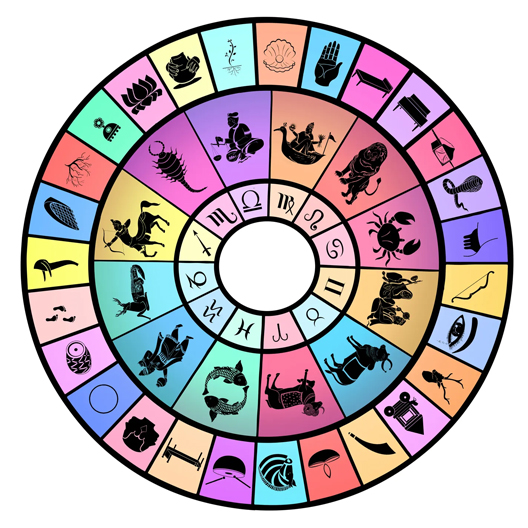
27 Nakshatras in Vedic Astrology: Birth Stars, Traits & Meanings
The Cosmic Fabric of Nakshatras
In the vast universe of Vedic Astrology, Nakshatras—the 27 lunar constellations—form the subtle fabric that connects human life with cosmic energy. Each Nakshatra marks a distinct segment of the zodiac, symbolizing the Moon’s journey through the heavens. As the Moon moves across these stellar mansions, it absorbs and radiates specific vibrations that influence human behavior, thoughts, and emotions.
Every individual is born under a particular Nakshatra, known as the birth star or Janma Nakshatra, which reflects the emotional tone, mental pattern, and karmic direction of their life. Understanding one’s Nakshatra reveals inner nature, hidden strengths, and life tendencies shaped by celestial rhythm.
What Are Nakshatras?
Nakshatras are the 27 luminous constellations that divide the zodiac into equal parts, forming the foundation of the lunar system in Vedic Astrology. Each Nakshatra spans 13°20′ of the zodiac, creating a complete 360° circle when combined. These divisions represent the precise path of the Moon, which takes about 27.3 days to orbit the Earth — spending roughly one day in each Nakshatra.
From a scientific perspective, Nakshatras correspond to specific star clusters or regions of the sky that the Moon passes through, influencing gravitational and energetic fields that subtly affect life on Earth.
From a spiritual perspective, Nakshatras are viewed as the celestial abodes of divine energies, each ruled by a planetary lord and presided over by a unique deity. They are seen as channels through which cosmic intelligence expresses human consciousness.
While zodiac signs (Rashis) represent the broader solar-based divisions of the ecliptic, Nakshatras operate on a deeper, lunar level—revealing the emotional, intuitive, and karmic dimensions of life. Rashis describe the outer personality, whereas Nakshatras unveil the inner soul vibration that shapes destiny.
Importance of Nakshatras in Vedic Astrology
Nakshatras hold a central place in Vedic Astrology because they reveal the Moon’s emotional and psychological influence on human life. While planets and houses describe outer circumstances, Nakshatras uncover the inner script—the subtle forces guiding thoughts, feelings, and destiny. Each Nakshatra carries its own vibration, deity, symbol, and planetary ruler, which together shape a person’s unique life pattern.
Personality and Behavior
The birth Nakshatra defines core personality traits, emotional tendencies, and natural instincts. It explains how one reacts to life events rather than what happens. For instance, Ashwini-born individuals tend to be energetic and healing-oriented, while Rohini-born natives express creativity and charm.
Career and Relationships
Nakshatras influence the type of work, environment, and relationships a person thrives in. Some Nakshatras favor leadership and communication, while others align with creativity, service, or healing. Understanding one’s birth star helps in aligning career choices and partnerships with natural strengths.
Compatibility and Marriage
In Vedic matchmaking, Nakshatra matching (Koota system) assesses emotional and spiritual harmony between partners. It evaluates compatibility beyond physical or material levels, ensuring balance in temperament, purpose, and life direction.
Dasha Periods
Each Nakshatra governs a specific planetary Dasha sequence, influencing life phases and karmic experiences. The planet ruling the birth Nakshatra starts the individual’s Dasha cycle, setting the tone for early life events and future transitions.
Connection with Janma Nakshatra (Birth Star)
The Janma Nakshatra, the Nakshatra occupied by the Moon at birth, acts as the key to one’s emotional foundation and karmic journey. It reveals mental patterns, instinctive behavior, and the rhythm of life experiences. Recognizing and honoring the birth star allows one to live in greater alignment with the cosmic design.
Classification of 27 Nakshatras
In Vedic Astrology, the 27 Nakshatras are systematically classified according to their planetary rulers, elements, nature, and gunas, each contributing to their distinct vibration and influence. This multi-layered classification helps astrologers interpret how cosmic energy expresses itself through an individual’s mind, emotions, and destiny.
Based on Planetary Rulers (Nakshatra Lords)
Every Nakshatra is governed by one of the nine planets, creating a repeating sequence three times across the zodiac. The ruling planet transmits its energy through the Nakshatra, influencing how it manifests in life.
| Planetary Ruler | Associated Nakshatras |
|---|---|
| Ketu | Ashwini, Magha, Mula |
| Venus | Bharani, Purva Phalguni, Purva Ashadha |
| Sun | Krittika, Uttara Phalguni, Uttara Ashadha |
| Moon | Rohini, Hasta, Shravana |
| Mars | Mrigashira, Chitra, Dhanishta |
| Rahu | Ardra, Swati, Shatabhisha |
| Jupiter | Punarvasu, Vishakha, Purva Bhadrapada |
| Saturn | Pushya, Anuradha, Uttara Bhadrapada |
| Mercury | Ashlesha, Jyeshtha, Revati |
Based on Elements
Nakshatras are aligned with the natural elements that reflect their temperament and style of expression.
- Fire Nakshatras – Energetic, inspiring, and action-driven.
- Earth Nakshatras – Grounded, practical, and nurturing.
- Air Nakshatras – Intuitive, intellectual, and adaptable.
- Water Nakshatras – Emotional, sensitive, and deeply perceptive.
Based on Nature (Gana)
Every Nakshatra is categorized into three fundamental natures that reveal behavioral essence:
- Deva (Divine Nature) : Gentle, kind, harmonious (e.g., Rohini, Punarvasu, Shravana)
- Deva (Divine Nature) : Balanced, social, intelligent (e.g., Bharani, Hasta, Anuradha)
- Rakshasa (Energetic Nature) : Strong-willed, bold, transformational (e.g., Ashwini, Ardra, Jyeshtha)
Based on Guna (Energy Quality)
- Sattva : Pure, calm, and spiritual
- Rajas : Active, ambitious, and creative
- Tamas : Grounded, enduring, and disciplined
Comprehensive Table of 27 Nakshatras
| Nakshatra | Ruling Planet | Symbol | Deity | Zodiac Span | Nature (Gana) |
|---|---|---|---|---|---|
| Ashwini | Ketu | Horse’s Head | Ashwini Kumars | 0°–13°20′ Aries | Rakshasa |
| Bharani | Venus | Yoni | Yama | 13°20′–26°40′ Aries | Manushya |
| Krittika | Sun | Razor / Flame | Agni | 26°40′ Aries – 10° Taurus | Rakshasa |
| Rohini | Moon | Chariot | Brahma | 10°–23°20′ Taurus | Deva |
| Mrigashira | Mars | Deer’s Head | Soma | 23°20′ Taurus – 6°40′ Gemini | Deva |
| Ardra | Rahu | Teardrop | Rudra | 6°40′–20° Gemini | Manushya |
| Punarvasu | Jupiter | Bow | Aditi | 20° Gemini – 3°20′ Cancer | Deva |
| Pushya | Saturn | Flower / Cow’s Udder | Brihaspati | 3°20′–16°40′ Cancer | Deva |
| Ashlesha | Mercury | Serpent | Nagas | 16°40′–30° Cancer | Rakshasa |
| Magha | Ketu | Royal Throne | Pitris (Ancestors) | 0°–13°20′ Leo | Rakshasa |
| Purva Phalguni | Venus | Hammock | Bhaga | 13°20′–26°40′ Leo | Manushya |
| Uttara Phalguni | Sun | Bed / Two Legs | Aryaman | 26°40′ Leo – 10° Virgo | Manushya |
| Hasta | Moon | Hand | Savitar | 10°–23°20′ Virgo | Manushya |
| Chitra | Mars | Bright Jewel | Tvashtar | 23°20′ Virgo – 6°40′ Libra | Rakshasa |
| Swati | Rahu | Coral / Plant Shoot | Vayu | 6°40′–20° Libra | Deva |
| Vishakha | Jupiter | Archway | Indra-Agni | 20° Libra – 3°20′ Scorpio | Rakshasa |
| Anuradha | Saturn | Lotus | Mitra | 3°20′–16°40′ Scorpio | Deva |
| Jyeshtha | Mercury | Circular Amulet | Indra | 16°40′–30° Scorpio | Rakshasa |
| Mula | Ketu | Roots | Nirriti | 0°–13°20′ Sagittarius | Rakshasa |
| Purva Ashadha | Venus | Fan / Winnowing Basket | Apah (Water Deity) | 13°20′–26°40′ Sagittarius | Manushya |
| Uttara Ashadha | Sun | Elephant Tusk | Vishvadevas | 26°40′ Sagittarius – 10° Capricorn | Deva |
| Shravana | Moon | Ear | Vishnu | 10°–23°20′ Capricorn | Deva |
| Dhanishta | Mars | Drum | Eight Vasus | 23°20′ Capricorn – 6°40′ Aquarius | Rakshasa |
| Shatabhisha | Rahu | Circle / Healing Pot | Varuna | 6°40′–20° Aquarius | Rakshasa |
| Purva Bhadrapada | Jupiter | Sword / Double-faced Man | Aja Ekapada | 20° Aquarius – 3°20′ Pisces | Manushya |
| Uttara Bhadrapada | Saturn | Twins / Bed | Ahir Budhnya | 3°20′–16°40′ Pisces | Manushya |
| Revati | Mercury | Fish | Pushan | 16°40′–30° Pisces | Deva |
Each Nakshatra in this classification carries its own planetary vibration, elemental essence, and divine archetype, creating a multidimensional framework that defines the spiritual and psychological diversity of human life.
List of the 27 Nakshatras — Birth Stars and Traits
The 27 Nakshatras, or birth stars, form the spiritual backbone of Vedic Astrology. Each Nakshatra has a distinct vibration shaped by its planetary ruler, symbol, deity, and element. Together, they influence temperament, life choices, and compatibility. Explore each Nakshatra below to discover the unique gifts and lessons written in the stars.
Ashwini Nakshatra — The Star of Initiation
- Symbol: Horse’s Head
- Element: Fire
- Ruler: Ketu
- Deity: Ashwini Kumars (Divine Healers)
- Personality Highlights: Energetic, pioneering, healing-oriented, spontaneous.
- Favorable Careers: Medicine, sports, innovation, travel, and adventure.
- Compatibility Notes: Harmonious with fiery and independent Nakshatras such as Magha and Mula.
Bharani Nakshatra — The Star of Discipline
- Symbol: Yoni (Womb)
- Element: Earth
- Ruler: Venus
- Deity: Yama (Lord of Dharma and Transformation)
- Personality Highlights: Determined, intense, courageous, with strong moral conviction.
- Favorable Careers: Law, administration, psychology, teaching, and leadership.
- Compatibility Notes: Aligns with grounded and balanced Nakshatras like Purva Phalguni and Purva Ashadha.
Krittika Nakshatra — The Star of Power
- Symbol: Razor or Flame
- Element: Fire
- Ruler: Sun
- Deity: Agni (God of Fire)
- Personality Highlights: Ambitious, courageous, disciplined, and purifying by nature.
- Favorable Careers: Armed forces, leadership, politics, or culinary arts.
- Compatibility Notes: Resonates with dynamic Nakshatras such as Uttara Phalguni and Uttara Ashadha.
Rohini Nakshatra — The Star of Beauty
- Symbol: Chariot
- Element: Earth
- Ruler: Moon
- Deity: Brahma (Creator)
- Personality Highlights: Attractive, creative, nurturing, and emotionally expressive.
- Favorable Careers: Arts, fashion, agriculture, media, and education.
- Compatibility Notes: Best aligned with stable and creative Nakshatras like Hasta and Shravana.
Mrigashira Nakshatra — The Star of Curiosity
- Symbol: Deer’s Head
- Element: Air
- Ruler: Mars
- Deity: Soma (Moon God)
- Personality Highlights: Inquisitive, adaptable, youthful, and romantic.
- Favorable Careers: Research, communication, teaching, writing, and trade.
- Compatibility Notes: Suits intellectual and exploratory Nakshatras such as Swati and Revati.
Ardra Nakshatra — The Star of Transformation
- Symbol: Teardrop
- Element: Water
- Ruler: Rahu
- Deity: Rudra (Storm God)
- Personality Highlights: Deep, intense, powerful, with a passion for renewal.
- Favorable Careers: Technology, crisis management, psychology, and innovation.
- Compatibility Notes: Works well with emotionally strong Nakshatras like Jyeshtha and Mula.
Punarvasu Nakshatra — The Star of Renewal
- Symbol: Bow and Quiver
- Element: Air
- Ruler: Jupiter
- Deity: Aditi (Goddess of Abundance)
- Personality Highlights: Optimistic, forgiving, adaptable, spiritually inclined.
- Favorable Careers: Education, healing, counseling, and philosophy.
- Compatibility Notes: Best with nurturing Nakshatras such as Pushya and Anuradha.
Pushya Nakshatra — The Star of Nourishment
- Symbol: Flower / Cow’s Udder
- Element: Water
- Ruler: Saturn
- Deity: Brihaspati (Guru of the Gods)
- Personality Highlights: Supportive, wise, responsible, and spiritual.
- Favorable Careers: Teaching, social service, counseling, management.
- Compatibility Notes: Excellent with patient and stable Nakshatras like Rohini and Uttara Phalguni.
Ashlesha Nakshatra — The Star of Intuition
- Symbol: Serpent Coil
- Element: Water
- Ruler: Mercury
- Deity: Nagas (Serpent Deities)
- Personality Highlights: Mysterious, intuitive, strategic, and persuasive.
- Favorable Careers: Psychology, research, diplomacy, healing arts.
- Compatibility Notes: Connects with transformative Nakshatras like Ardra and Jyeshtha.
Magha Nakshatra — The Star of Legacy
- Symbol: Royal Throne
- Element: Fire
- Ruler: Ketu
- Deity: Pitris (Ancestors)
- Personality Highlights: Dignified, authoritative, proud, and loyal to tradition.
- Favorable Careers: Leadership, politics, genealogy, performing arts.
- Compatibility Notes: Harmonizes with strong and independent Nakshatras such as Mula and Purva Phalguni.
(Continue the same structure for all remaining Nakshatras — Purva Phalguni through Revati — each having symbol, element, ruler, deity, personality traits, career insights, compatibility, and link to its dedicated page.)
Each Nakshatra acts as a unique cosmic signature, offering deeper insight into emotional intelligence, karmic patterns, and life purpose. By exploring each birth star, one gains awareness of how lunar vibrations shape destiny and relationships across time.
Nakshatra and Human Life Stages
Nakshatras play a vital role in shaping human development across the three main stages of life — childhood, adulthood, and maturity. Since the Moon governs the mind and emotions, its placement within a particular Nakshatra creates distinct patterns of growth and transformation throughout one’s journey. Each stage reflects how the lunar energy unfolds, guiding emotional evolution and karmic learning.
Childhood: The Formation of Emotional Patterns
In early years, the Janma Nakshatra (birth star) strongly influences emotional sensitivity, learning style, and family bonding.
- Children born under softer Nakshatras like Rohini or Hasta display affection, curiosity, and creativity.
- Those under transformative Nakshatras like Ardra or Mula experience deep emotions and rapid inner changes.
The early stage reflects the Moon’s tender phase — receptive and full of imagination — where foundational traits are imprinted.
Adulthood: Expression and Action
During adulthood, the active nature of Nakshatras emerges. Planetary Dashas connected to the birth Nakshatra trigger opportunities for growth, relationships, and career expression.
- Dynamic Nakshatras such as Krittika, Magha, or Purva Ashadha encourage leadership and initiative.
- Balanced Nakshatras like Anuradha or Pushya guide cooperative, socially aware behavior.
This stage represents the waxing Moon — building identity, responsibility, and interaction with the world.
Maturity: Wisdom and Spiritual Integration
In later years, the influence of Nakshatras deepens into introspection and realization. Individuals begin understanding the spiritual lessons encoded within their birth star.
- Sattvic Nakshatras (e.g., Punarvasu, Uttara Ashadha, Revati) promote peace, detachment, and devotion.
- Rajasik or Tamasic Nakshatras channel experience into mastery and wisdom through effort and reflection.
This mature stage aligns with the waning Moon — illuminating inner awareness and karmic completion.
Lunar Influence on Emotional Growth and Karmic Evolution
As the Moon cycles through all Nakshatras monthly, it mirrors the soul’s continuous evolution — from emotional dependence to spiritual independence. The Janma Nakshatra acts as a guidepost in this journey, revealing how one learns, adapts, and transforms through life experiences. Understanding this rhythm allows individuals to nurture self-awareness and live in harmony with their emotional and karmic blueprint.
Nakshatra and Compatibility (Matchmaking Insight)
In Vedic Astrology, Nakshatra matching plays a vital role in assessing emotional and spiritual harmony between two individuals before marriage. This system, known as the Koota Milan, evaluates how the lunar vibrations of each person interact to create balance in love, understanding, and shared destiny. Since Nakshatras influence emotions and instincts—governed by the Moon—they reveal the subtle compatibility that goes beyond external attraction or social factors.
The Koota System: A Traditional Compatibility Framework
The Koota system consists of eight parameters (Ashta Koota), each representing a different aspect of marital harmony. Together, they total 36 points, where a higher score indicates better alignment between partners.
| Koota | Aspect Represented | Purpose in Compatibility |
|---|---|---|
| Varna Koota | Spiritual and social level | Measures harmony in ideals and purpose |
| Vashya Koota | Mutual influence and control | Determines attraction and adaptability |
| Tara Koota | Health and fortune | Evaluates prosperity and emotional support |
| Yoni Koota | Sexual and biological compatibility | Reflects intimacy and reproductive energy |
| Graha Maitri Koota | Planetary friendship | Indicates mental and intellectual harmony |
| Gana Koota | Temperament and behavior | Balances emotional tone between partners |
| Rashi Koota | Zodiac sign relation | Measures emotional connection and mutual respect |
| Nadi Koota | Health, genetics, and destiny | Ensures vitality and longevity of relationship |
A total score of 18 or above is considered auspicious for marriage, though astrologers also assess the emotional depth and karmic resonance indicated by the Janma Nakshatra itself.
The Importance of Janma Nakshatra in Relationship Harmony
The Janma Nakshatra, or the Nakshatra occupied by the Moon at birth, holds the key to emotional expression and compatibility. It defines how an individual connects, communicates, and nurtures in relationships.
- Partners whose birth stars are mutually friendly (based on planetary lords and elemental alignment) experience smoother emotional flow and understanding.
- The deity and symbol of each Nakshatra also shape relationship patterns — for example, nurturing Nakshatras like Pushya or Rohini create warmth and stability, while fiery stars like Krittika or Magha bring passion and leadership energy.
- If the Gana (nature) of two Nakshatras aligns — Deva, Manushya, or Rakshasa — it supports psychological and spiritual balance in the partnership.
Ultimately, Nakshatra compatibility reveals not just how two people relate, but why their energies attract or challenge each other. It guides couples toward greater empathy, patience, and understanding — forming a union that evolves through love, respect, and karmic purpose.
Remedies and Strengthening Your Birth Nakshatra
Every Nakshatra carries a unique cosmic vibration that influences your emotions, habits, and spiritual tendencies. When its energy feels imbalanced, it can affect confidence, relationships, and decision-making. Strengthening your Janma Nakshatra (birth star) helps you stay aligned with your life path, attract positive experiences, and maintain emotional stability. Vedic astrology prescribes specific remedies—spiritual, elemental, and behavioral—that harmonize your inner rhythm with universal energy.
Daily Mantras and Rituals
Chanting the mantra associated with your Nakshatra’s presiding deity purifies the mind and awakens inner strength. The sound vibrations harmonize the lunar energy, balancing emotional and mental fluctuations.
Daily Practices for Nakshatra Balance:
- Begin your day by facing the east direction and mentally invoking your Nakshatra deity.
- Chant the Nakshatra mantra 108 times using a tulsi or rudraksha mala.
- Light a ghee lamp or offer water to the rising sun for lunar and solar balance.
- On your Nakshatra day (once every 27 days), perform a simple puja or meditation for gratitude and clarity.
- Engage in silence or introspection during the Moon’s transit over your Nakshatra to renew inner calm.
Example:
If your Nakshatra is Ashwini, chant the mantra “Om Ashwini Kumara Devatabhyo Namah” and focus on healing, speed, and rejuvenation throughout the day.
Suitable Gemstones and Colors
Each Nakshatra resonates with a particular gemstone and color that amplifies its positive vibrations. Wearing these consciously helps stabilize emotional flow and enhances auspicious planetary energy.
| Nakshatra Type | Recommended Gemstone | Beneficial Color | Purpose |
|---|---|---|---|
| Fiery Nakshatras (Krittika, Bharani, Magha) | Ruby, Garnet | Red, Gold | Boosts vitality, courage, leadership |
| Earthy Nakshatras (Rohini, Uttara Phalguni, Hasta) | Emerald, Peridot | Green, Cream | Grounds emotions, promotes growth |
| Airy Nakshatras (Swati, Shatabhisha, Revati) | Diamond, White Sapphire | White, Light Blue | Enhances clarity, communication |
| Watery Nakshatras (Pushya, Purva Bhadrapada, Anuradha) | Pearl, Moonstone | Silver, Light Yellow | Balances emotions, deepens compassion |
Always wear the gemstone after proper purification and energization under astrological guidance to ensure harmony with your planetary chart.
Ideal Direction or Activity for Balance
Each Nakshatra is connected to an elemental direction and life activity that aligns your energy with its natural flow. Moving or meditating in this direction enhances focus and peace.
| Nakshatra Element | Favorable Direction | Harmonizing Activity |
|---|---|---|
| Agni (Fire) | East | Morning exercise, chanting, creative work |
| Prithvi (Earth) | South | Gardening, organizing, grounding practices |
| Vayu (Air) | West | Pranayama, writing, open-air meditation |
| Jala (Water) | North | Charity, spiritual rituals, introspection |
When you consciously move, meditate, or work in your Nakshatra’s direction, you synchronize your aura with cosmic balance — enhancing intuition, focus, and emotional strength.
By aligning daily actions, colors, and rituals with your birth Nakshatra, you build a steady bridge between cosmic energy and personal purpose. This conscious harmony helps life flow with clarity, joy, and divine rhythm.
Nakshatra Padas (Quarters)
Each Nakshatra in Vedic astrology is divided into four equal parts, known as Padas or quarters. These four divisions represent subtle shades of personality, emotion, and destiny within each Nakshatra. While the Nakshatra shows your overall soul pattern, the Pada reveals your specific nature, habits, and karmic path.
The Concept of Four Padas
A full zodiac circle has 360°, and every Nakshatra spans 13°20′ of the zodiac. This span is further divided into four Padas, each measuring 3°20′.
Each Pada corresponds to a particular Navamsa (1/9th division of a sign), linking your Nakshatra directly to deeper spiritual and relationship dynamics. Thus, your Nakshatra Pada acts as a microcosm—refining how your soul expresses its energy in practical life.
| Aspect | Explanation |
|---|---|
| Number of Padas per Nakshatra | 4 (First, Second, Third, Fourth) |
| Each Pada’s Span | 3°20′ of the zodiac |
| Connection | Each Pada maps to one sign in the Navamsa chart |
| Purpose | To reveal inner refinement, karma, and soul evolution |
How Padas Refine Personality Traits
While all individuals born under one Nakshatra share certain qualities, their Pada placement fine-tunes the expression of those traits.
- 1st Pada — Expresses the raw essence of the Nakshatra: energetic, pioneering, eager to act.
- 2nd Pada — Adds stability and practicality, focusing on material growth and tangible outcomes.
- 3rd Pada — Brings creativity, communication, and learning, highlighting emotional and intellectual traits.
- 4th Pada — Reflects spiritual maturity and emotional depth, emphasizing inner wisdom and higher purpose.
For example, someone born in Ashwini Nakshatra 1st Pada may show dynamic leadership, while another in Ashwini 4th Pada expresses healing and compassion more subtly.
Influence on the Navamsa Chart (D9)
The Navamsa chart—a key divisional chart in Vedic astrology—represents the soul’s finer blueprint and the path of spiritual evolution. Each Nakshatra Pada maps to one of the twelve zodiac signs in the Navamsa, adding another layer of depth.
Example:
- Ashwini Nakshatra’s four Padas fall under Aries, Taurus, Gemini, and Cancer Navamsas.
- An Ashwini 1st Pada (Aries Navamsa) person shows assertive energy.
- An Ashwini 4th Pada (Cancer Navamsa) individual exhibits emotional sensitivity and nurturing qualities.
This mapping helps astrologers interpret:
- Marriage and relationships (through Navamsa D9).
- Spiritual orientation (based on the Navamsa sign).
- Refined karmic lessons and emotional tendencies.
The Cosmic Significance
Nakshatra Padas act as bridges between lunar energy and Navamsa wisdom, offering a deeper insight into human consciousness. Understanding your Nakshatra Pada can reveal:
- Your soul’s micro-vibration within the cosmic field.
- The direction of karmic refinement in this lifetime.
- How your inner potential manifests in relationships and spirituality.
In essence, Nakshatra Padas transform broad cosmic patterns into individualized experiences. They guide the soul from instinctive action to spiritual realization, helping you understand not just who you are—but why you express your Nakshatra’s energy the way you do.
Aligning with Your Birth Star
Your Nakshatra is more than a constellation — it is your cosmic fingerprint, reflecting the Moon’s vibration at the time of your birth. Understanding this birth star helps you cultivate self-awareness, emotional balance, and purpose-driven action. Each Nakshatra carries lessons that guide the soul through joy, challenge, and transformation, shaping the story of your destiny.
When you recognize your Nakshatra’s influence on personality, relationships, and decision-making, life becomes more aligned with universal rhythm. You begin to understand why you feel certain impulses, how you connect with others, and what karmic paths lead you toward fulfillment.
To deepen this awareness, explore how Nakshatras interact with:
- asha System — reveals time cycles ruled by planets that activate specific Nakshatra energies.
- Planets (Navagrahas) — explain the celestial forces shaping your emotional and mental patterns.
- 12 Houses in Astrology — show the areas of life where your Nakshatra expresses its fullest potential.
Every Moon phase carries divine meaning, and your Nakshatra connects your heart to that eternal rhythm.
